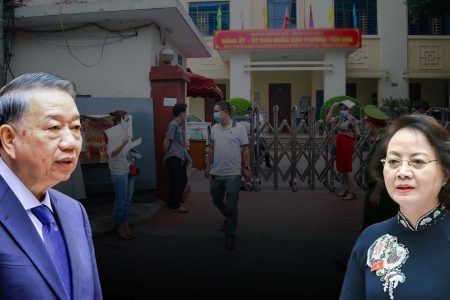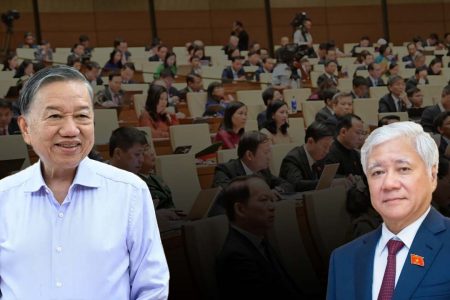
The decision to classify large-scale projects in the Vĩnh Hưng and Ba Vì areas as subject to land expropriation for national and public interests is presenting the Hanoi municipal government with a high-pressure governance challenge.
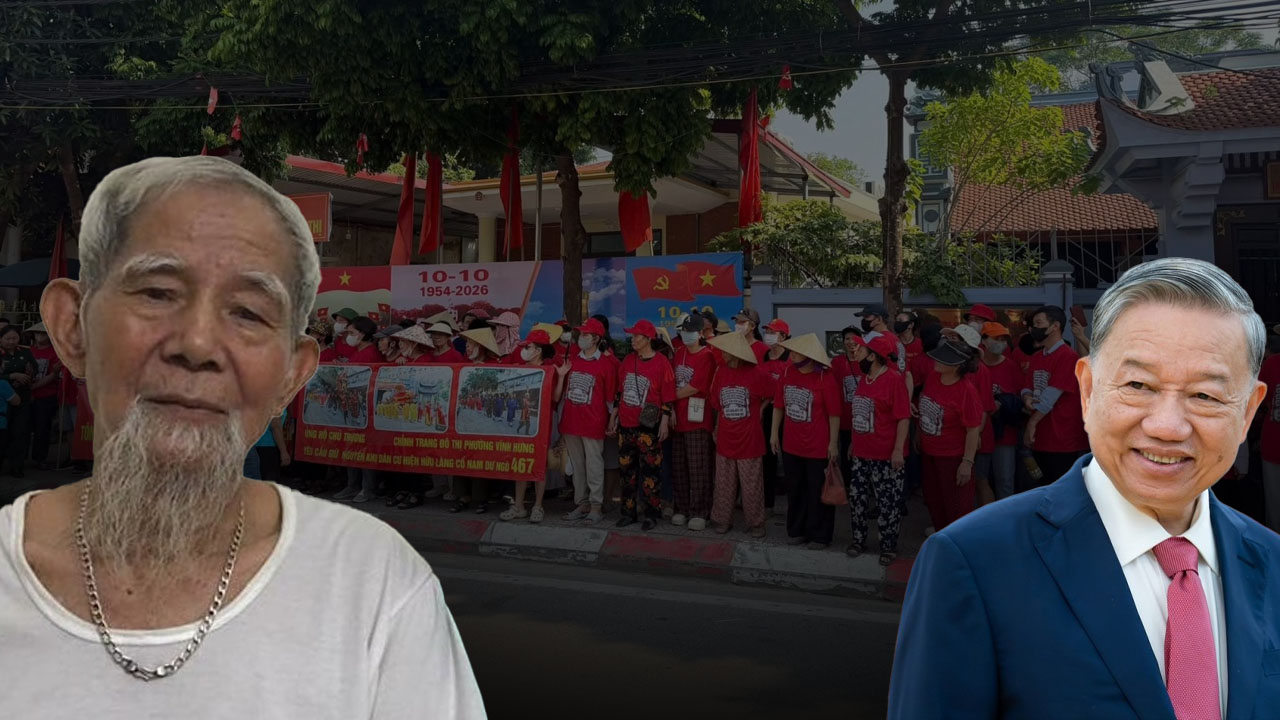
This legal decree means that authorities have the right to apply strict enforcement measures if residents do not voluntarily hand over their land. This occurs when residents’ right to negotiate prices is stripped away to make way for administrative orders.
Public opinion immediately raised questions about the most extreme scenario: Is there a risk that the painful lessons from the land conflict in Dong Tam, My Duc—Hanoi—years ago could be repeated if residents choose the path of defiance and resistance to the very end?
According to international analysts, to answer this thorny question, one must look squarely at the nature of the projects currently being implemented by the Hanoi municipal government.
Unlike the ambiguity and decades-long disputes over boundaries between defense land and agricultural land in Dong Tam, the projects in Vinh Hung and Ba Vi were established on a consistent legal foundation from the outset.
The land acquisition plan was publicly approved by the City People’s Council, strictly adhering to the provisions of the Land Law.
This “perfect” legal framework, on the one hand, grants the state absolute authority to clear land for infrastructure development, while on the other hand, it eliminates organized resistance.
Furthermore, Dong Tam—a purely agricultural village characterized by close-knit clan ties and a tightly knit community—provided fertile ground for extreme resistance and sustained consensus.
In contrast, Vinh Hung is a rapidly urbanizing area with high population density, a complex demographic makeup, and fragmented land interests among vastly different ownership groups.
The fragmentation of economic interests in a gateway city like Vinh Hung or a semi-mountainous area like Ba Vi makes the formation of an armed resistance front or large-scale violent unrest impossible.
Moreover, the 2020 Dong Tam incident serves as a hard-learned lesson that neither the security apparatus nor the Ba Dinh leadership will ever overlook. Capital city officials clearly understand that brutal imposition without providing post-expropriation livelihoods is the spark that ignites every crisis.
That is why, in current plans, the approach has shifted markedly from confrontation to early prevention and appeasement.
The plan to allocate more than 14 hectares of land to build on-site resettlement housing complexes for thousands of Vinh Hung households—combined with a priority on commercial space to ensure employment—is an effort to eliminate the root causes of protracted disputes.
The Hanoi authorities have also continuously organized dialogues and sought direct feedback to ensure transparency in the flow of compensation funds, thereby avoiding psychological shocks for those who have lost their land.
However, observers still warn of potential risks as the line between national interests and commercial interests is being manipulated by special interest groups.
If oversight mechanisms from judicial agencies, the press, and the Vietnam Fatherland Front are rendered ineffective, it will lead to unfair compensation assessments, and a wave of civil disobedience could still erupt.
However, if the people remain determined to resort to extreme forms of resistance, the most likely scenario would be for the government to resolutely carry out forced evictions under the strict protection of rapid-response forces, while isolating and prosecuting individuals inciting unrest.
Therefore, there will be no second Dong Tam, as the price to pay for security instability in the nation’s political center is something Ba Dinh will do everything in its power to prevent.
Tra My – Thoibao.de